 Mad Over Stories Team
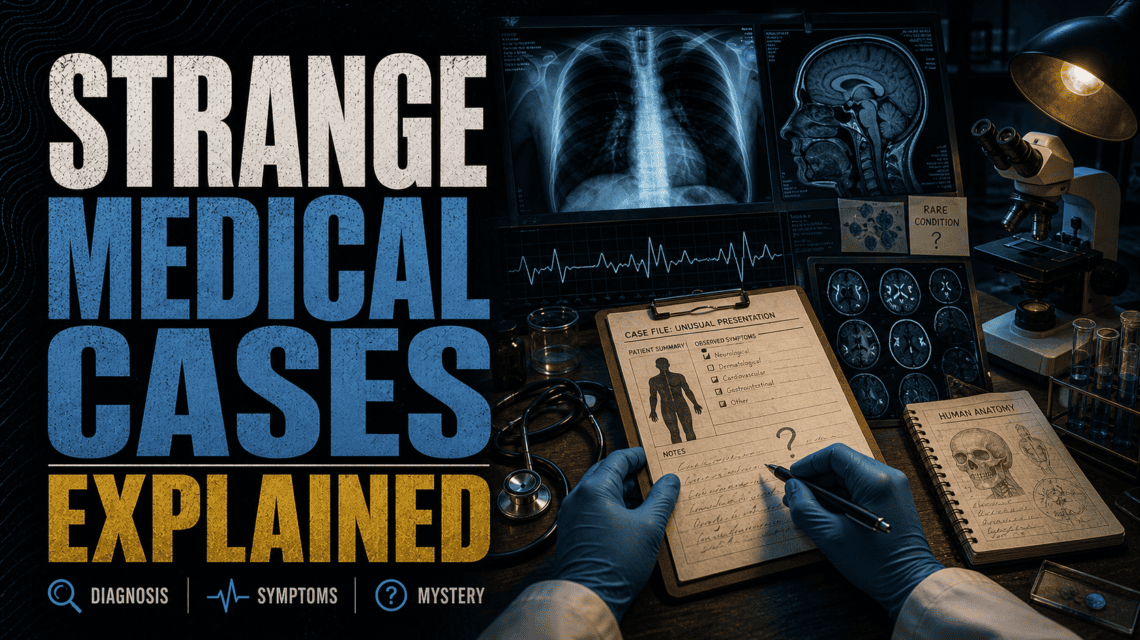
 Some medical cases sound impossible until you understand the biology behind them. The conditions below are real and documented in the scientific literature, and each one reveals something about how the brain builds our experience of the body and the world. They deserve curiosity, not spectacle, so here is what is actually going on.
Some links below are affiliate links. As an Amazon Associate, Mad Over Stories earns from qualifying purchases.
When the brain misreads the body
Phantom limb pain
After an amputation, many people still vividly feel the missing limb, sometimes including pain, itching, or the sense that a hand is clenched. The limb is gone, but the brain regions that mapped it remain active and can be “invaded” by neighboring areas. Neuroscientist V. S. Ramachandran famously used a simple mirror box to give patients the visual illusion of moving the lost limb, which relieved pain for some, showing how deeply vision and body perception are linked.
Cotard’s delusion
First described by the French neurologist Jules Cotard in the 1880s, this rare condition involves the fixed belief that one is dead, does not exist, or has lost internal organs. It is associated with severe depression and certain neurological conditions, and one leading idea links it to a disconnect between perception and the emotional response that normally makes experiences feel real. It is treatable, and it is a window into how the brain generates the basic feeling of being alive.
When the senses cross or misfire
Synesthesia
In synesthesia, one kind of sensory input automatically triggers another. People with grapheme-color synesthesia see specific letters or numbers as inherently colored; others taste words or link sounds to shapes. It is not imagination or metaphor, it is consistent and involuntary, and brain imaging shows genuinely different cross-activation. It runs in families and appears in a notable minority of the population, quietly and often pleasantly.
Blindsight
When the brain’s primary visual cortex is damaged, a person can become blind in part of their visual field, reporting they see nothing there. Yet some can still “guess” the location or movement of objects far better than chance, and may flinch from obstacles they claim not to see. This is blindsight, and it shows the eyes feed several pathways in the brain, only some of which produce conscious sight.
Foreign accent syndrome
In extremely rare cases, usually after a stroke or brain injury, a person’s speech changes so that listeners perceive a foreign accent. Crucially, the speaker has not actually acquired another language’s accent; subtle damage alters the timing, rhythm, and vowel sounds of speech, and our ears interpret the result as “foreign.” It underlines how much precise motor control ordinary talking requires.
The neurologist Oliver Sacks made a career of telling such stories with rigor and compassion, and his classic case studies remain the best introduction to this territory.

The Man Who Mistook His Wife for a Hat
Oliver Sacks's landmark collection of real neurological case studies, told with rare humanity and clinical insight.
View on Amazon →Related Reading
- Science Discovery
- Animals With Strange Abilities That Scientists Are Still Studying
- Best Science Books for Curious Adults Who Want Wonder Without Jargon
Research Notes
- Pew Research Center
- Edison Research True Crime Consumer Report
- Google Trends Summergeist
- AP / Publishers Weekly best-seller list
Editorial note: Mad Over Stories prioritizes source-aware storytelling. For true crime and real-life topics, we avoid naming private individuals unnecessarily, distinguish confirmed facts from interpretation, and update articles when better information becomes available.
More From Mad Over Stories
You Might Also Like
Ancient Technology Discoveries That Make the Past Feel More Inventive
Mysterious Radio Signals From Space: What Fast Bursts May Be Telling Us

Best Science Books for Curious Adults Who Want Wonder Without Jargon
Scientific Discoveries Everyone Should Know Because They Changed Daily Life
Deep Ocean Mysteries: Why Earth's Largest Habitat Still Feels Alien