 Mad Over Stories Team
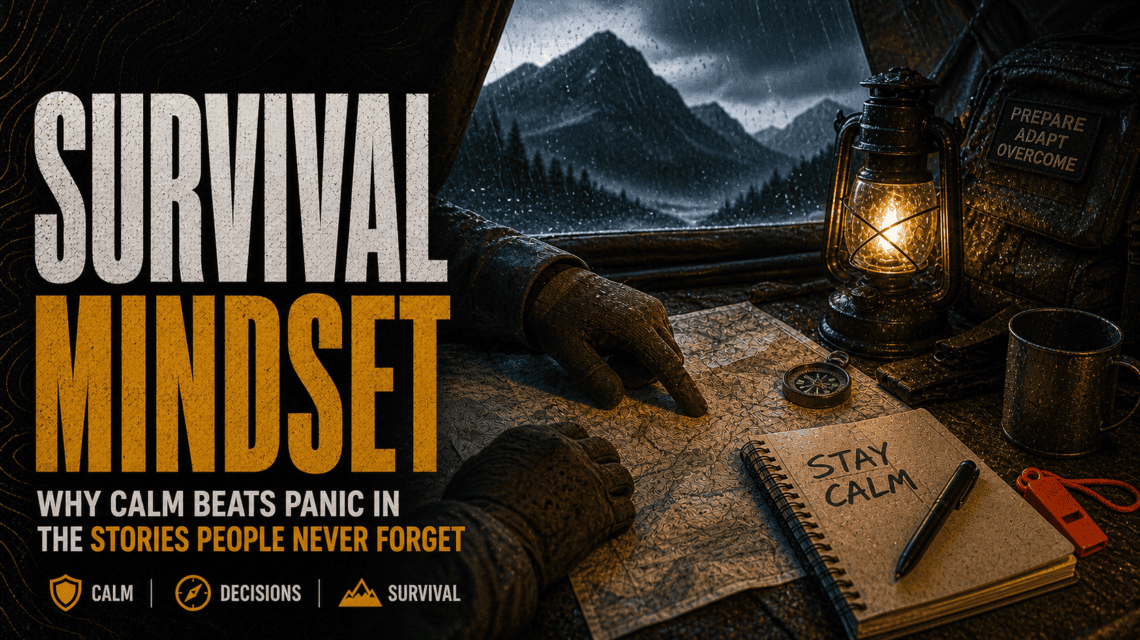
 In almost every survival story worth remembering, the person who lived was not the strongest or the best equipped. They were the calmest. Panic, it turns out, is a physical event that actively degrades your ability to survive, while calm is a skill that can be trained. Understanding the science of staying composed under extreme stress explains why the same crisis kills one person and is quietly managed by another.
Some links below are affiliate links. As an Amazon Associate, Mad Over Stories earns from qualifying purchases.
What Panic Does to the Body
When the brain perceives mortal danger, the amygdala triggers a flood of adrenaline and cortisol, the fight-or-flight response. Heart rate spikes, blood shifts away from fine motor control, and attention narrows into what psychologists call cognitive tunneling: the field of view shrinks, hearing dulls, and complex thought becomes difficult. In a genuine emergency, this “amygdala hijack” can cause people to fumble simple tasks, fixate on the wrong thing, or freeze entirely. Panic is not weakness. It is physiology overriding reason at the worst possible moment, and learning to blunt it is the core survival skill.
Tools That Restore Calm
The good news is that the same nervous system can be steered back toward calm on demand. Slow, controlled breathing is the most reliable lever. Box breathing, inhaling for four counts, holding for four, exhaling for four, and holding for four, is used by military operators and first responders precisely because it activates the parasympathetic “rest and digest” system and lowers heart rate within a minute or two. A single long, slow exhale, sometimes called a physiological sigh, has a similar quieting effect. These techniques work because you cannot consciously order your heart to slow, but you can control your breath, and the breath drags the rest of the system with it.
The Rule of Threes
Calm also comes from having a mental framework that replaces panic with priorities. Survival instructors teach the “rule of threes” as a rough guide: a person can generally last about three minutes without air, three hours without shelter in harsh conditions, three days without water, and three weeks without food. The numbers are approximations, not guarantees, but their value is psychological as much as practical. When everything feels like an emergency, the rule of threes tells you what actually is one, so you address exposure and shelter before you obsess over food. It converts a formless terror into an ordered to-do list.
The Survivor’s Mindset
In Deep Survival, Laurence Gonzales studied who lives and who dies in extreme situations and found consistent mental traits. Survivors perceive and accept their reality quickly rather than clinging to denial. They stay calm, then think, analyze, and plan before acting. They break the ordeal into small, achievable tasks and celebrate each tiny win, which keeps morale and momentum alive. They find meaning, count their blessings, and sometimes use humor or song to defuse fear. Crucially, they neither give up nor charge ahead recklessly. The recurring lesson across the stories people never forget is that calm is not the absence of fear. It is the discipline to keep thinking while afraid.

Deep Survival: Who Lives, Who Dies, and Why
Gonzales blends real survival cases with the neuroscience of fear and decision-making to explain why mindset, more than gear, determines who makes it out.
View on Amazon →For skills to pair with the mindset, see the best survival books for beginners.
Related Reading
Research Notes
- Pew Research Center
- Edison Research True Crime Consumer Report
- Google Trends Summergeist
- AP / Publishers Weekly best-seller list
Editorial note: Mad Over Stories prioritizes source-aware storytelling. For true crime and real-life topics, we avoid naming private individuals unnecessarily, distinguish confirmed facts from interpretation, and update articles when better information becomes available.
More From Mad Over Stories
You Might Also Like






1 Comment