 Mad Over Stories Team
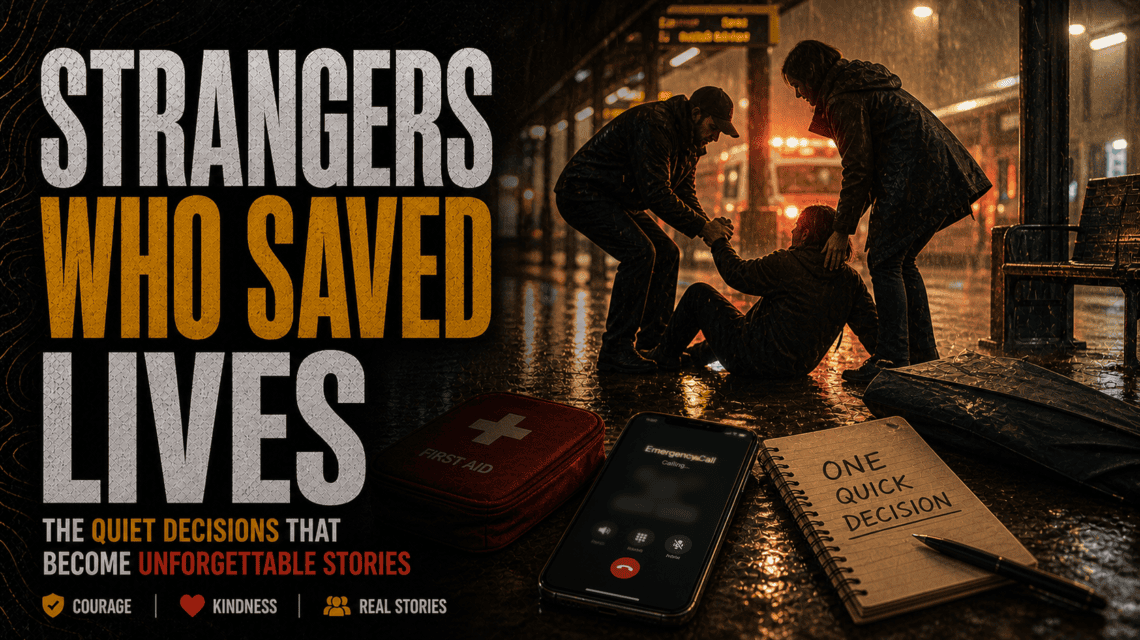
 Some of the most unforgettable rescues are performed not by professionals but by strangers who happened to be there. A commuter, a beachgoer, a passerby makes a split-second choice to step into danger for someone they have never met. These stories move us because they seem to defy self-interest, and because they raise an uncomfortable question: in the same moment, would we have acted, or frozen?
Wesley Autrey and the Subway
In January 2007, construction worker Wesley Autrey was waiting on a Manhattan subway platform with his two young daughters when a stranger nearby had a seizure and fell onto the tracks as a train approached. With seconds to act, Autrey jumped down, realized he could not lift the man out in time, and instead pinned him flat in the drainage trough between the rails while the train passed over both of them. Both survived. Autrey, later dubbed the “Subway Hero,” insisted he had simply done what needed doing. His story endures because it compresses the entire moral drama of bystander courage into a few terrifying seconds.
When Crowds Become Rescuers
Not every stranger rescue is a solo act. Rip currents at ocean beaches routinely pull swimmers out to sea, and a recurring, remarkable response is the human chain: beachgoers linking arms and wading out to reach people they cannot otherwise save. In a widely reported 2017 incident at Panama City Beach, Florida, dozens of strangers formed a chain roughly 80 people long to pull a family caught in a rip current back to shore. These moments show something the solo stories cannot: that ordinary people, given a clear way to help, will organize themselves into a rescue in real time.
The Psychology of Who Steps In
Social psychologists have studied bystander behavior since the 1960s, when the murder of Kitty Genovese sparked research into why witnesses sometimes fail to act. John Darley and Bibb Latané identified the “bystander effect,” in which the presence of many onlookers can actually reduce the odds that any single person helps, through diffusion of responsibility, everyone assumes someone else will, and pluralistic ignorance, where people read others’ calm as a sign that nothing is wrong. Their decision model describes five steps a helper must pass through: noticing the event, interpreting it as an emergency, feeling personally responsible, knowing what to do, and finally choosing to act.
Why Some People Don’t Freeze
The encouraging counterpoint is that people help far more often than the bystander effect alone would predict, especially when the danger is unambiguous and they possess relevant skills or confidence. Studies of real emergencies caught on public cameras find that intervention is common, not rare. The people who act tend to be those who quickly read the situation as a genuine emergency and feel a personal duty to respond, whether from training, temperament, or values. That is why these stories resonate. They remind us that the difference between a bystander and a rescuer is often just the willingness to move through that decision chain a little faster than everyone else.
Related Reading
- Human Interest
- Best Survival Books of All Time
- Incredible Survival Stories and the Split-Second Decisions That Changed Everything
- Miracle Rescue Stories: How Search Teams Turn Tiny Clues Into Lifelines
Research Notes
- Pew Research Center
- Edison Research True Crime Consumer Report
- Google Trends Summergeist
- AP / Publishers Weekly best-seller list
Editorial note: Mad Over Stories prioritizes source-aware storytelling. For true crime and real-life topics, we avoid naming private individuals unnecessarily, distinguish confirmed facts from interpretation, and update articles when better information becomes available.
More From Mad Over Stories
You Might Also Like