
 Mad Over Stories Team
 Editor’s note: This is a narrative story published for entertainment. Names, details, and dialogue may be fictionalized or composited, and the story as told here should not be treated as verified reporting. See our Editorial & Content Policy.
The word was “still.”
That was it. One word, printed in the notes field of the intake chart. Not a medical notation. Not an abbreviation. Just the word “still,” written in the same place, in the same handwriting, on 47 separate patient charts over three years.
When the hospital’s quality review team found it, they assumed it was a documentation error. Then they started reading the charts more carefully.
The ICU, Wing 4, 2018–2021
Saint-Claire Regional Medical Center is a mid-sized hospital in the Pacific Northwest. Wing 4’s intensive care unit handles primarily post-surgical recovery and complex chronic cases. Staff turnover is lower than average — several nurses have worked the same floor for over a decade.
Among them was a nurse named Teresa B., who had worked Wing 4 for 14 years.
The 47 charts with the word “still” in the intake notes all had one thing in common: Teresa was the nurse on duty when they were completed.
What the Patterns Revealed
The hospital’s risk management team was not initially alarmed. A word written out of format in a notes field could be many things — a habit, an in-joke, a personal mnemonic. They asked Teresa for an explanation.
What she told them required two conversations to fully understand, and a third for it to be believed.
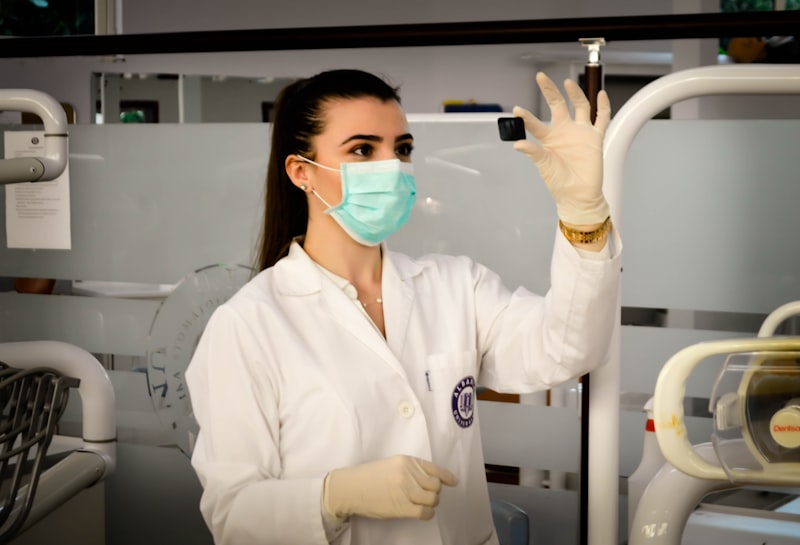
She had been writing the word as a signal. Not to administrators or other nurses — there was no intended audience. She had been writing it for herself. When a patient came in and something in her assessment — something she could not name in clinical terms — felt wrong in a way that the vital signs didn’t yet confirm, she wrote “still.” It was her notation for pay closer attention to this one.
She had begun doing it years before, she said, after a patient whose markers had looked stable had deteriorated suddenly overnight. She’d had a feeling at intake that she couldn’t articulate. She hadn’t documented it. The patient survived, but barely.
Read more: for 6 years every animal avoided this stretch of Oregon road.
What Happened to Those 47 Patients
The risk management team cross-referenced all 47 charts with patient outcomes.
Of the 47 patients Teresa had marked “still” at intake, 39 had experienced a significant complication during their stay — an adverse event, a deterioration requiring escalation, a near-miss. Most had occurred within 72 hours of admission.
The baseline rate of comparable complications for the same unit during the same period was 31 percent.
Teresa’s “still” patients had a complication rate of 83 percent.
What It Means — And What Medicine Doesn’t Know What to Do With
No one is claiming Teresa had precognitive ability. The hospital’s inquiry didn’t conclude that. What it found — and what the subsequent research collaboration with a university behavioral medicine department explored — was that Teresa was detecting and encoding clinical signals that weren’t yet measurable by standard intake protocols.
The term used in the resulting paper was implicit clinical intuition — experienced nurses develop pattern recognition from thousands of observations that outpaces what they can consciously articulate. Teresa wasn’t predicting the future. She was reading a room full of data points she had no formal language for yet.
The word “still” was the closest thing she had to a notation for something medicine hadn’t yet formalized.
Why 23 Million People Read About One Word
Teresa’s story was first reported in a healthcare industry newsletter. Within two weeks, it had been covered by The Guardian, NPR, and three major medical journals. A thread on Reddit’s r/medicine received over 40,000 comments. The story trended twice.
The response was not primarily from medical professionals. It was from people who recognized the experience: the feeling you can’t explain that turned out to be right, the pattern recognition that arrived before the data, the times you knew something without being able to say how.
Teresa’s “still” went viral because everyone recognized it.
Read more: survival stories about bodies that refused to give in when statistics said they should.
The Science of Knowing Before You Can Say
Gary Klein, a cognitive psychologist, spent decades studying decision-making in high-pressure environments — firefighters, military commanders, nurses. What he found consistently was that experts don’t decide by running through checklists. They recognize. Pattern recognition in expert practitioners allows them to detect anomalies in situations that appear normal to everyone else — often based on micro-signals: posture, coloration, speech rhythm, breathing pattern.

The clinical research on intuition in nursing has been building for 20 years. Nurses who develop what researchers call holistic pattern recognition — integrating sensory, behavioral, and emotional signals — consistently outperform protocol-only intake assessments in identifying at-risk patients.
Teresa wrote “still” for 14 years, quietly, in a notes field no one read.
It took a spreadsheet to prove what she already knew.
Teresa continues to work in Wing 4. The hospital has since developed a formal protocol for flagging patients with similar ambiguous-but-concerning intake presentations. The new notation is a structured risk marker with three sub-classifications.
Medicine occasionally surfaces cases that don’t fit cleanly into existing diagnostic categories. One of the most documented recent examples: a woman who woke up from surgery speaking fluent French — despite never having left Ohio. Like Teresa’s observation, the paper trail is clear. The mechanism is not.
The pattern of noticing something significant and choosing not to act — or not to publish — appears more often than most people would expect. A mysterious true story that a research team deliberately kept out of published reports follows the same logic: the data was real, the hesitation was real, and neither has a clean explanation.
Everyone on the floor calls it the “still” flag.

Read more: a phone whose 18 months of messages after death felt eerily familiar to readers of this story.
Read more: twins separated at birth and the science behind their shared lives.
📚 Keep reading: our guide to the best survival books.
More From Mad Over Stories
You Might Also Like






 For 23 Years, No One in This Town Knew What Was Buried Under Their Park
  The Stack of Letters Hidden in the Attic Wall — And the Stranger Who Wrote Every Single One
  The Phone That Kept Receiving Messages Two Years After Its Owner Died — And What the Records Revealed
  The Teenage Girl Who Survived 11 Days Alone in the Amazon After the Plane Went Down
  She Kept Having the Same Dream About a Street She’d Never Visited — Then the DNA Test Changed Everything
  The Hotel Room That Was Never Listed — What Guests Found Behind a False Wall