 Mad Over Stories Team
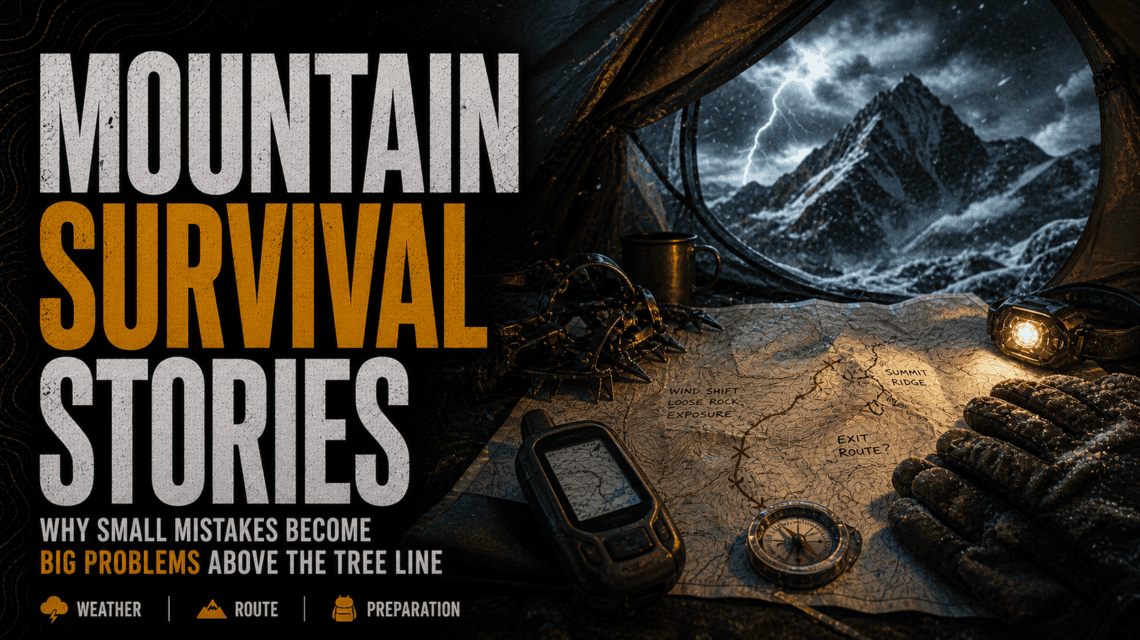
 Mountains punish small mistakes more harshly than almost any other environment. At sea level, a late start or a wrong turn is an inconvenience. Above the tree line, where the air is thin, the weather turns in minutes, and rescue may be hours or days away, the same minor error can start a chain reaction that ends in tragedy. The most sobering mountain stories are rarely about one catastrophic blunder. They are about several tiny lapses that lined up.
How Small Errors Cascade at Altitude
High on a mountain, problems compound because everything is connected. A pack left slightly too heavy slows the pace. The slow pace pushes the summit past the safe turnaround time. The late descent runs into the afternoon storm that mountains reliably brew. Cold and fatigue then impair judgment further, which leads to the next mistake. Each link on its own is survivable. Chained together, they overwhelm a climber’s margin for error. This is why experienced mountaineers obsess over seemingly small disciplines: fixed turnaround times, weather windows, and honest pacing.
The 1996 Everest Disaster
The May 1996 tragedy on Mount Everest, chronicled by Jon Krakauer in Into Thin Air, is the classic case study of cascading errors. Bottlenecks at fixed ropes delayed the ascent. Preset turnaround times slipped as climbers, gripped by summit fever after paying and training for years, pushed on past the safe hour. When a fierce storm rolled in during the descent, climbers were caught high on the mountain, exhausted and low on oxygen, in fading light. Eight people died over those two days, including the veteran expedition leaders Rob Hall and Scott Fischer. No single decision doomed them. It was the accumulation of delays and thin margins in the deadliest possible place.
Touching the Void: A Broken Leg and a Cut Rope
In 1985, Joe Simpson and Simon Yates made a difficult descent of Siula Grande in the Peruvian Andes after summiting. Simpson broke his leg in a fall, and Yates tried to lower him down the mountain on ropes in a storm. When Simpson ended up dangling over a crevasse with no way to communicate, Yates faced an agonizing choice and cut the rope to avoid being pulled off himself. Simpson fell into the crevasse, survived, and, with a shattered leg and no food or water, spent days crawling and hopping back to base camp. His book Touching the Void shows how quickly a routine descent becomes a fight for life when one injury removes every easy option.
Cold, Altitude, and the Erosion of Judgment
Part of why mountains are so unforgiving is that the environment attacks the very faculty you need most: clear thinking. Hypothermia produces what rescuers call the “umbles,” the stumbles, mumbles, fumbles, and grumbles that signal a person is losing coordination and reason. High altitude adds hypoxia, starving the brain of oxygen and dulling decision-making just when it matters most. A climber can feel calm and capable while making choices that, at sea level, they would recognize as reckless. The takeaway from these stories is not that mountains are to be feared, but that respect for small margins, weather, and turnaround discipline is what keeps a hard day from becoming a fatal one.
Related Reading
- Weird Survival Stories The Most Incredible Tales Of Human Resilience Against All Odds
- Best Survival Books of All Time
- Incredible Survival Stories and the Split-Second Decisions That Changed Everything
- Miracle Rescue Stories: How Search Teams Turn Tiny Clues Into Lifelines
Research Notes
- Pew Research Center
- Edison Research True Crime Consumer Report
- Google Trends Summergeist
- AP / Publishers Weekly best-seller list
Editorial note: Mad Over Stories prioritizes source-aware storytelling. For true crime and real-life topics, we avoid naming private individuals unnecessarily, distinguish confirmed facts from interpretation, and update articles when better information becomes available.