Mad Over Stories Team
 Editor’s note: This is a narrative story published for entertainment. Names, details, and dialogue may be fictionalized or composited, and the story as told here should not be treated as verified reporting. See our Editorial & Content Policy.
Karen Butler was a dental patient. The surgery was routine — a tooth extraction under general anesthesia, performed at a regular dental office in Toledo, Ohio. She went in speaking in the flat Midwestern accent she’d had her whole life.
She came out sounding like she was from Paris.
Not Paris, Ohio. Paris, France.
A Life in Toledo
Karen Butler had never lived anywhere outside Ohio. She had never studied French. She had no extended family in Europe and had visited the continent once, briefly, on a group tour in the mid-2000s. She was, by her own description, “the most Ohio person you’d ever meet.” She had worked as a tax preparer for many years. She liked her routines.
None of that changed after the surgery. Her routines stayed intact. Her memory was unaffected. Her personality remained the same. Her accent, however, was gone. In its place was something her children described as “British but French somehow.”
She had Foreign Accent Syndrome.
For a spellbinding tour of the brain’s strangest conditions, few books compare:

The Man Who Mistook His Wife for a Hat
Oliver Sacks’ classic case studies of the brain’s most extraordinary glitches.
View on Amazon →What Foreign Accent Syndrome Actually Is
Foreign Accent Syndrome (FAS) is a rare neurological phenomenon first documented in 1941, when a Norwegian woman sustained a brain injury from shrapnel and began speaking with what observers described as a German accent — at the time a deeply uncomfortable development in wartime Norway.
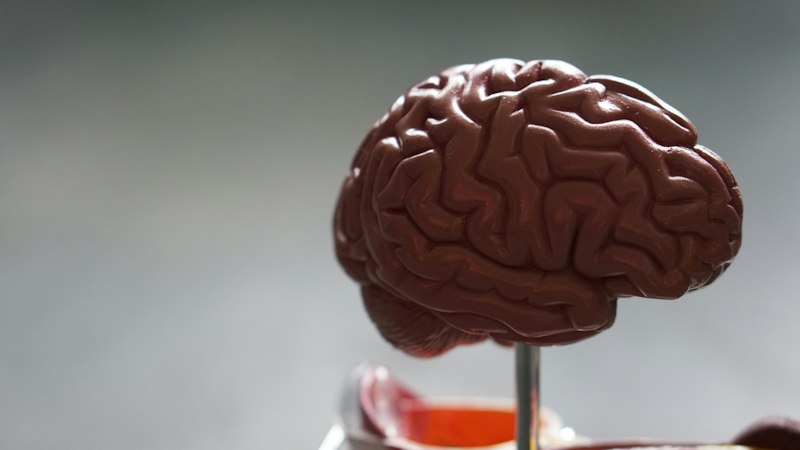
FAS is not, technically, a foreign accent. Neurolinguists who have studied it consistently note that affected individuals don’t acquire the precise accent of a foreign language — they develop a speech pattern that sounds like a foreign accent to native ears, but doesn’t match the phonological characteristics of any specific regional dialect. What changes is rhythm, vowel length, pitch variation, and stress pattern — subtle shifts that the listener’s brain categorizes as “foreign” because it doesn’t match the expected pattern.
The cause is neurological disruption, typically from stroke, injury, or — as in Karen’s case — the effects of sedation or anesthesia on neural pathway function. Most cases resolve within months. Some don’t.
Karen’s Didn’t Resolve
Karen’s accent persisted for over a decade. It softened slightly over the first year but never returned to her native pattern. She adapted. She bought a button to wear at the grocery store that said “I AM FROM OHIO, NOT FRANCE.”
She was not embarrassed by it, she said in interviews — she found it unusual and occasionally exhausting to explain, but she approached it with a practical humor that made her something of a local celebrity. Radio stations interviewed her. A documentary short was made. She gave talks at neurological conferences at the invitation of researchers who wanted to record her speech patterns.
She remained, throughout, entirely herself.
What the Case Revealed About the Brain and Identity
The reason Karen’s case gained international attention was not just its unusualness — FAS is rare but documented. It was the philosophical dissonance it surfaced.
The brain is the self. When the brain changes, we expect the self to change. Karen’s brain had clearly changed something — her speech pattern, fundamentally and irreversibly. But Karen herself was unchanged in every way that she and the people who knew her could identify. She was the same person saying the same things in a different voice.
It raised a question that neurologists and philosophers are still circling: how much of identity is tied to something as specific as the sound of your voice? And what does it mean when the answer is: apparently, less than you’d think?
Why 15 Million People Watched Karen
Karen appeared on a segment of an American morning show that has been viewed over 15 million times. The clip of her saying “I am from Toledo, Ohio” in what sounds unmistakably like a refined European accent is objectively one of the more disorienting pieces of audio available on the internet.
But the comments aren’t about the novelty. They’re about her composure. Her humor. The ease with which she holds a deeply strange reality without drama.
“She is genuinely okay about this,” one person wrote with 40,000 likes. “I’m not okay about things that are objectively fine. This woman is okay about waking up French.”
The Neuroscience of Identity and Voice
Voice is among the most reliable personal identifiers. We recognize a loved one’s voice in a fraction of a second — faster than face recognition in some conditions. The acoustic profile of a person’s speech is a fingerprint, and its disruption triggers a specific kind of social and emotional disorientation in both the speaker and their listeners.

Research on voice and identity shows that speakers whose voice changes significantly — through illness, surgery, aging, or neurological events — often experience profound identity disruption. They describe themselves as “not sounding like themselves,” which can feel as destabilizing as not looking like themselves.
Karen’s adaptation to her changed voice is remarkable. She found a different way to be recognizably herself: through behavior, humor, and deliberate warmth. She made the button.
Karen Butler died in 2017. She had spent more than a decade with her French accent.
Her obituary noted that she was a beloved tax preparer from Toledo, Ohio. It also mentioned the accent. It said she always laughed about it.
She was thoroughly, irreducibly from Ohio.
Medical anomalies often take time to be recognized precisely because they don’t fit the categories being used. A nurse who identified a pattern across 47 patient charts before anyone else noticed is a case where the observation itself was the discovery — not the underlying cause.
Foreign accent syndrome raises questions about how much of personality and language is stored in the body rather than in memory. The same questions surface in the case of twins separated at birth who shared habits, preferences, and health conditions they’d never been taught.
Some of the most striking medical and scientific cases share one quality: someone chose not to publish immediately. The deep-sea acoustic recording that researchers filed away and almost never published is the clearest documented example of that institutional hesitation — with a record of exactly why.
Neurological changes that alter behavior while leaving identity intact have parallels in other domains. For six years, every animal on a stretch of road in Oregon behaved in precisely the same way — responding to an electromagnetic signal that human instruments weren’t measuring. Like Karen’s adaptation to her changed voice, the animals were processing a real input through systems that weren’t designed to communicate it to others.
Cases where the explanation is confirmed but leaves something unresolved are consistent across science. A lake in Sweden that turned blood red overnight was eventually explained by algae biology — but the fisherman who photographed it remained unconvinced by the technical answer. Science can describe what happened to Karen Butler’s speech. It cannot give her her Ohio accent back.
She just sounded like she wasn’t.

Read more: the most incredible tales of human survival against all odds.
More From Mad Over Stories
You Might Also Like

Ancient Technology Discoveries That Make the Past Feel More Inventive

Mysterious Radio Signals From Space: What Fast Bursts May Be Telling Us

Best Science Books for Curious Adults Who Want Wonder Without Jargon

Scientific Discoveries Everyone Should Know Because They Changed Daily Life

Deep Ocean Mysteries: Why Earth's Largest Habitat Still Feels Alien